Illustrated parent guide
Baby Poop Visual Guide
Compare broad patterns in color and texture, understand what context matters, and learn which signs deserve prompt professional guidance. Illustrations are educational examples—not diagnostic standards.
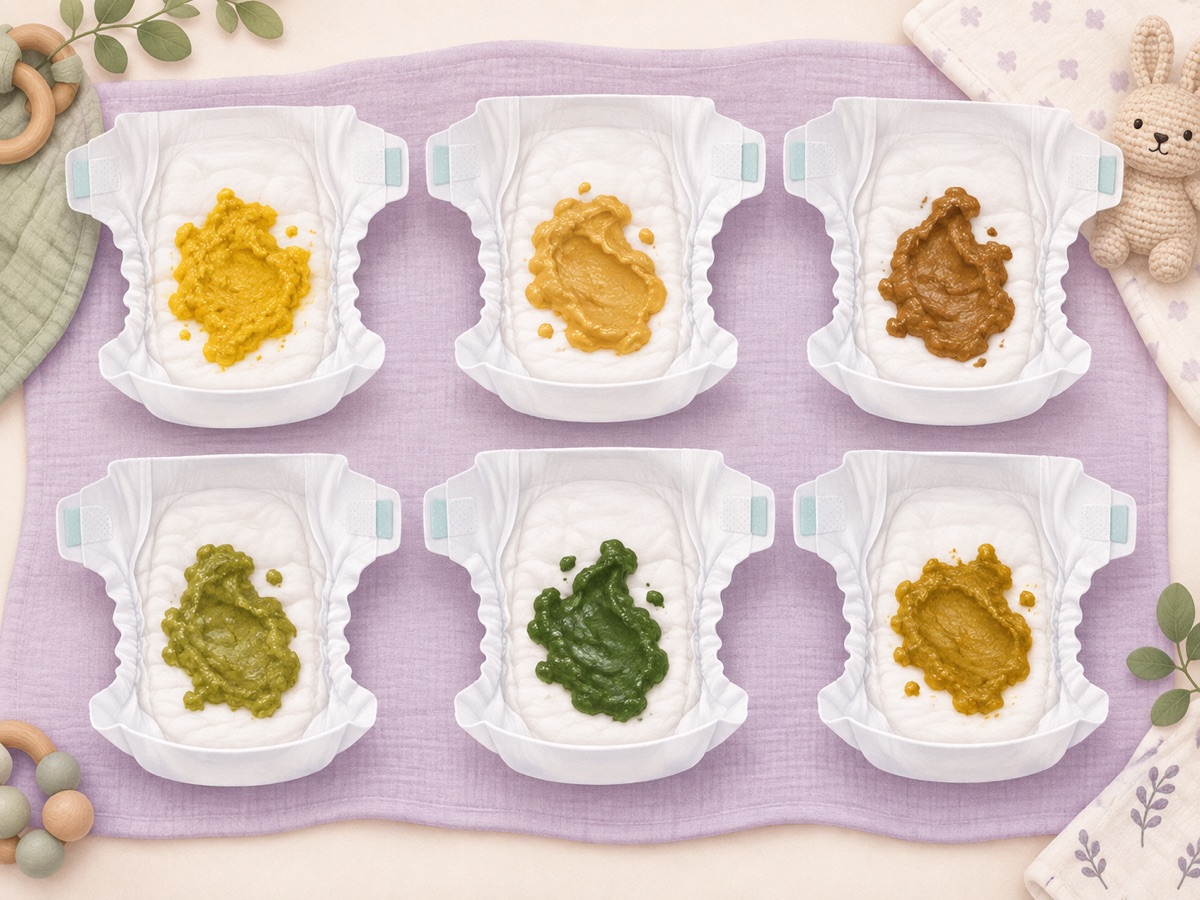
Color
Yellow, brown, and green can all occur
Baby stool color changes with age, feeding, bile, iron, medicines, and solid foods. Mustard yellow is often seen in breastfed babies, while tan or brown may be more common with formula or solids. Green can also occur for many non-urgent reasons.
Look for a change from your baby’s usual pattern and consider feeding, comfort, hydration, and other symptoms—not color in isolation.
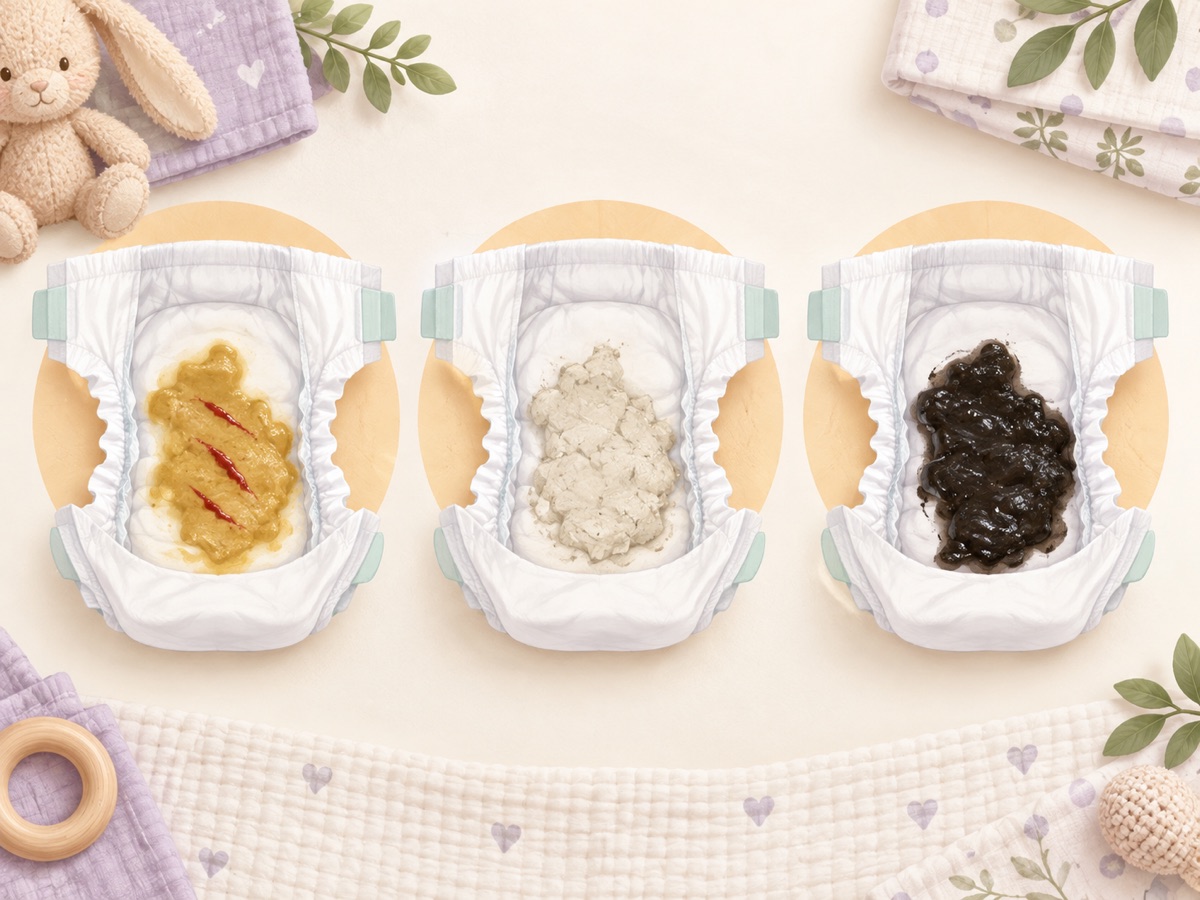
Prompt attention
Red, white or pale-gray, and tar-like black need context
Contact a qualified healthcare professional promptly for visibly bloody or red stool, white or pale-gray stool, or black tar-like stool after the newborn meconium period.
The illustration is a simplified visual reference. Foods, medicines, lighting, and camera processing can change apparent color, so do not use a screen comparison to rule a concern in or out.
Newborn meconium is normally very dark green or black in the first days of life.
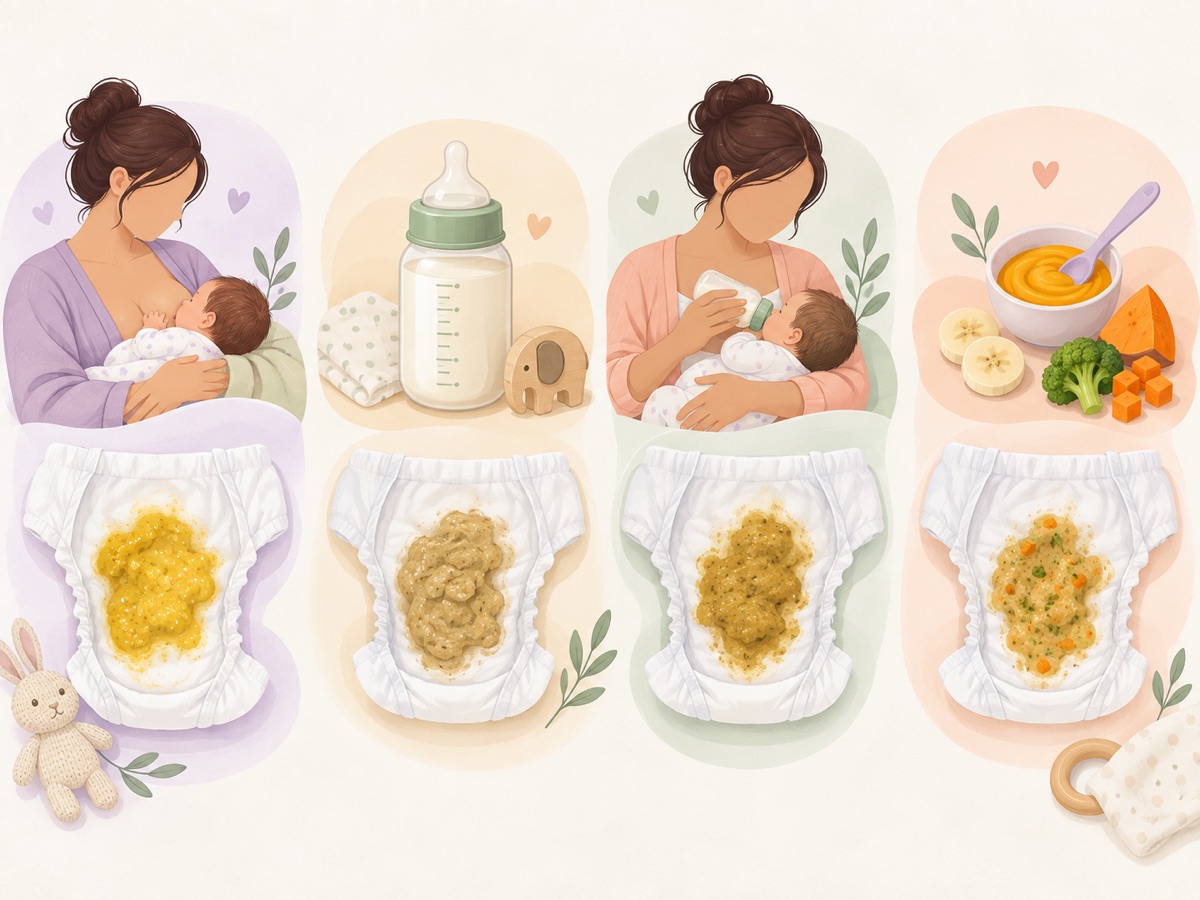
Feeding
Feeding stage can change appearance
Breastfed stools are often soft, loose, and seedy. Formula-fed stools may be thicker or pastier. Mixed feeding can share features of both, and solid foods commonly make stool thicker, darker, or more varied.
These are broad patterns, not rules. A sudden or persistent change matters more when it occurs with poor feeding, vomiting, fever, dehydration, pain, or a baby who seems unwell.
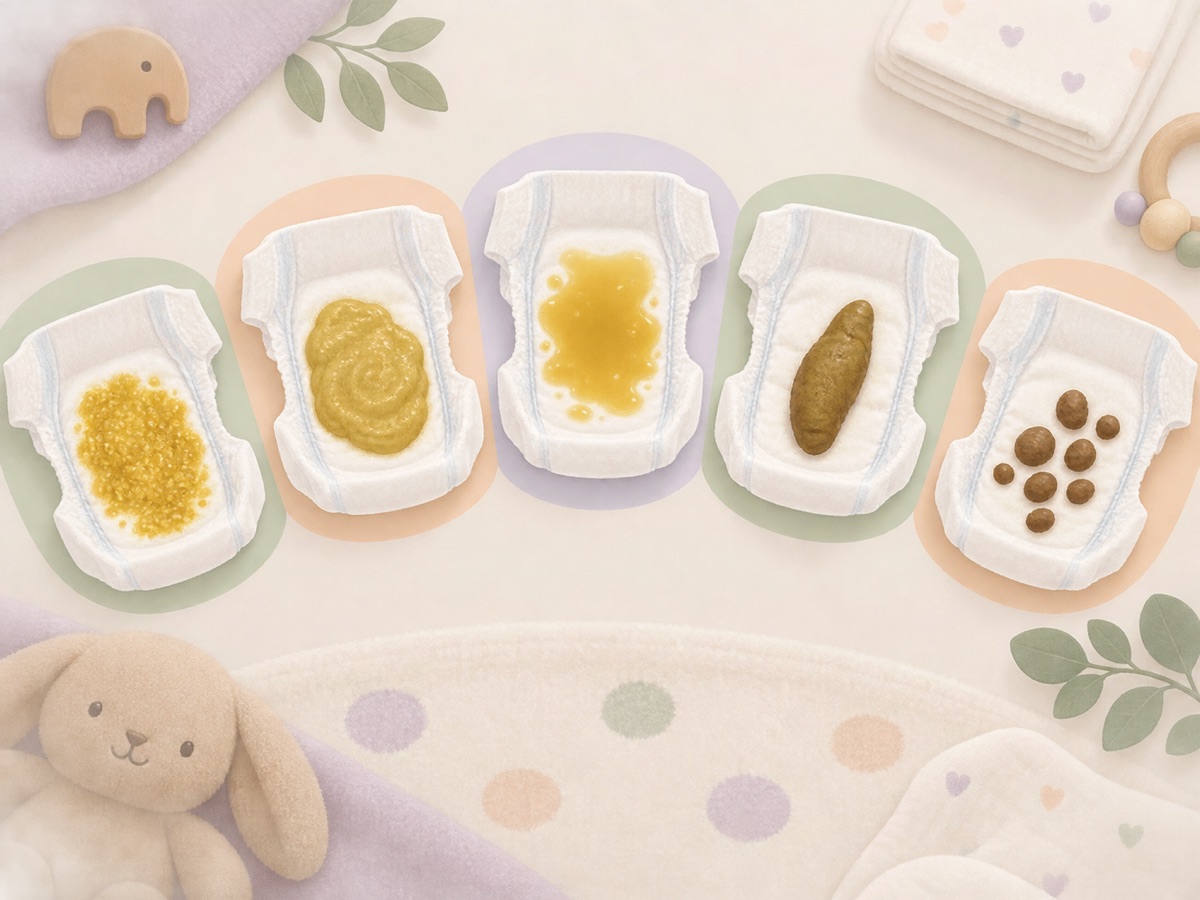
Texture
Describe texture without diagnosing it
Useful words include seedy, soft, pasty, loose, watery, formed, and hard or pellet-like. A single loose stool does not by itself establish diarrhea, and infrequent stool does not by itself establish constipation.
Track frequency, change from baseline, discomfort, hydration, and feeding. These details are more useful to a clinician than a color or texture label alone.

Whole-baby check
The diaper is only one part of the picture
Pay attention to wet diapers, feeding, tears, dry mouth, vomiting, temperature, alertness, and whether your baby is behaving normally. A photo cannot assess any of these.
Seek prompt medical guidance if your baby is difficult to wake, feeds poorly, has repeated vomiting, shows signs of dehydration, has a fever, seems very unwell, or is getting worse.

Better records
Photograph consistently and track changes
Use indirect daylight when possible, avoid filters, and include the full diaper without personal identifiers. Record the date, age, feeding method, medicines or iron, frequency, and other symptoms.
A clear record can help you explain a change to a healthcare professional. It should never delay contacting one when warning signs are present.
What this guide cannot tell you
- Whether a stool appearance has a particular medical cause
- Whether your baby is hydrated, in pain, feverish, or otherwise unwell
- Whether a photo’s color is accurate across lighting, cameras, and screens
Sources and further reading
Educational wording is informed by the independent resources below. BabyPoop AI is not affiliated with or endorsed by these organizations.
Want to organize what you observed?
BabyPoop AI can describe visible characteristics and organize the context you provide. It does not provide a diagnosis.
Go to the analysis toolEducational content reviewed: September 20, 2026